The Grammar Engine
This week we wrote down the editorial rules that make a SHUR IQ report read the way it should. Those rules now run as a repeatable agent program that reviews every report against them and proposes the fixes. Here is how it works, and what it did on its first full run.
From a habit in our heads to a program on the rails
A week ago, keeping a report clean depended on whoever was editing it remembering the rules: no inverted phrasing, no section that narrates itself, no idea argued twice in two places.
Every correction we made got written down — first as grammar rules with real IDs, then as standing feedback the system carries forward. The next step was to stop applying them by hand. The rules now drive an agent program that reads a finished report, scores it against the full rulebook, and returns the exact changes that bring it into line. The judgment is the same. The application is now consistent, fast, and the same every time.
One improvement loop, run on every report
Each round of feedback feeds the next. Nothing we learn has to be re-learned.
Feedback
A correction during a real build — phrasing, structure, a repeated idea.
Rule
Written down with an ID and a detection test, added to the rulebook.
Program
The agent pipeline reads the rulebook and reviews against every rule.
Verified result
Exact fixes applied, deployed, and checked on the live page.
Six agents, three stages, one apply-ready answer
The reviewers only read and judge; the edits are applied in one controlled pass afterward, so two agents can never collide on the same report.
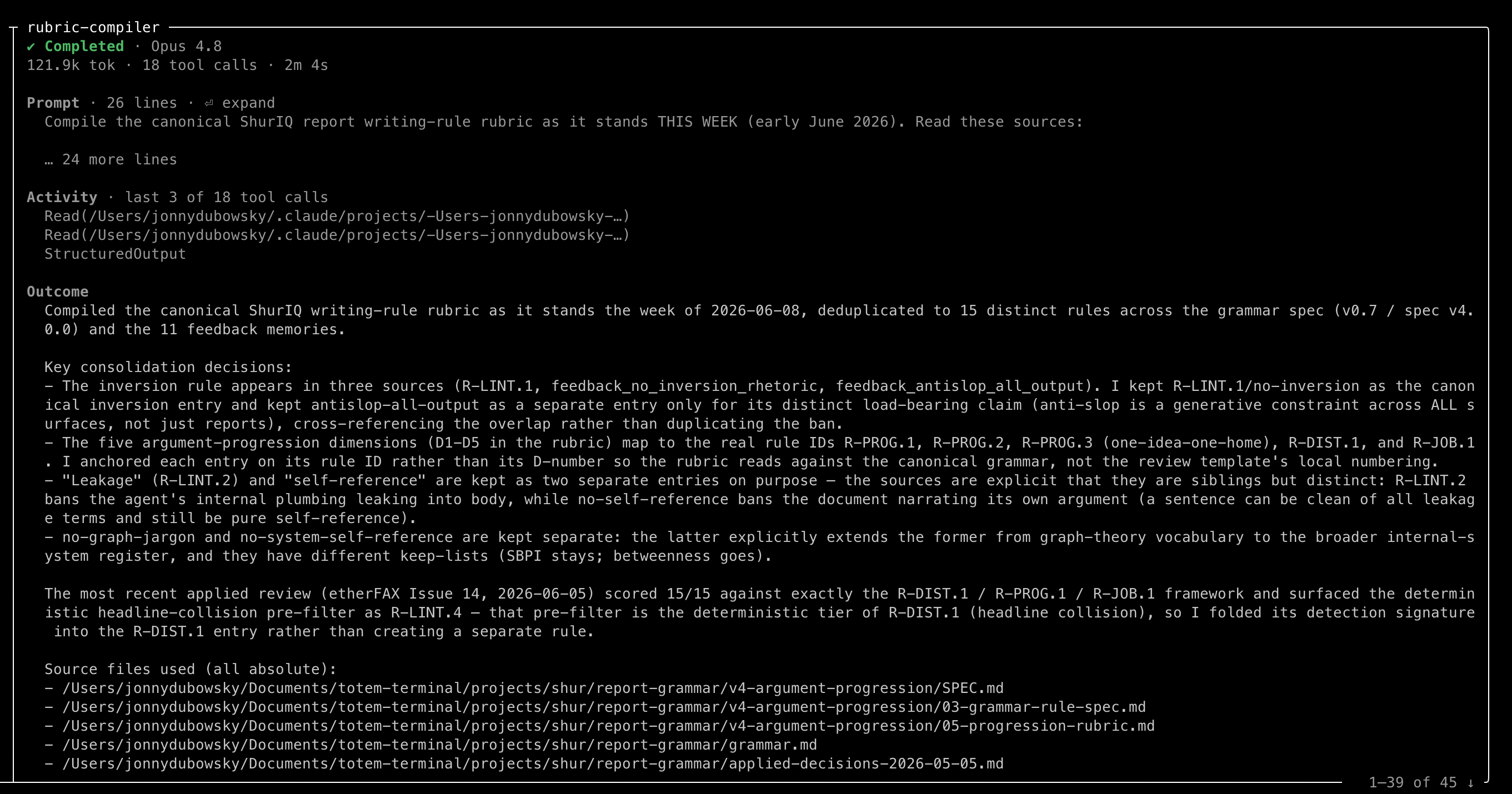
Build the canonical rulebook
One agent reads the grammar specification and every standing piece of feedback, then distills them into a single rubric — each rule with an ID, what it bans, and how to detect it. Every reviewer scores against the same reference.
Four reviewers, four lenses, in parallel
Each reviewer owns a cluster of rules and reads the whole report, returning every violation with the exact text, the problem, and a proposed fix that keeps the meaning and the voice.

Resolve, dedupe, verify against the live file
A final agent merges overlapping findings, drops false positives, re-checks every quote against the current text, and returns one ordered edit list ready to apply.

First full run: the AHA gold-standard report
We pointed the program at the v07 American Heart Association brief — the build that tracks our gold standard. It read the whole report, surfaced twenty raw findings, and resolved them into twelve verified changes. Every fix kept the facts and figures intact.
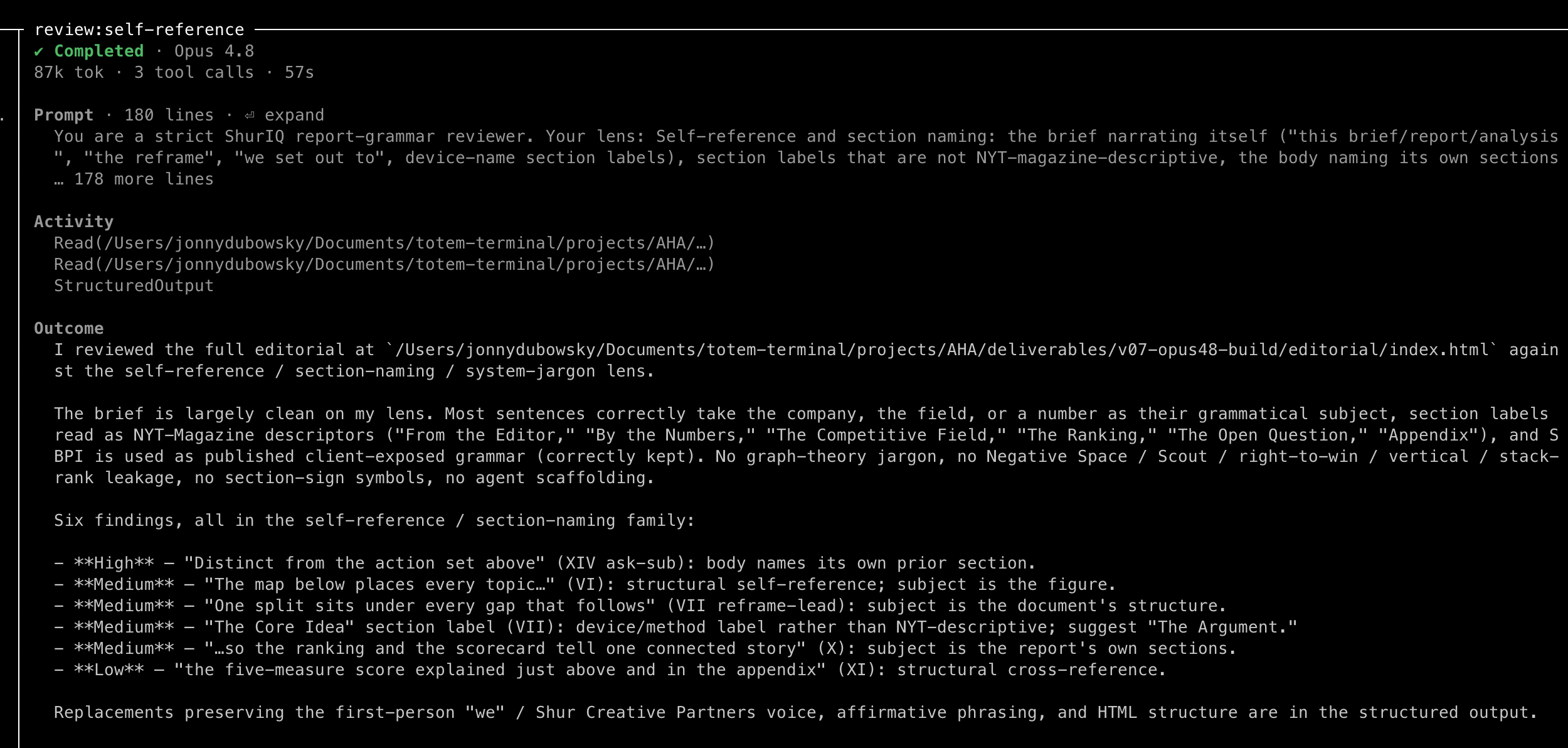
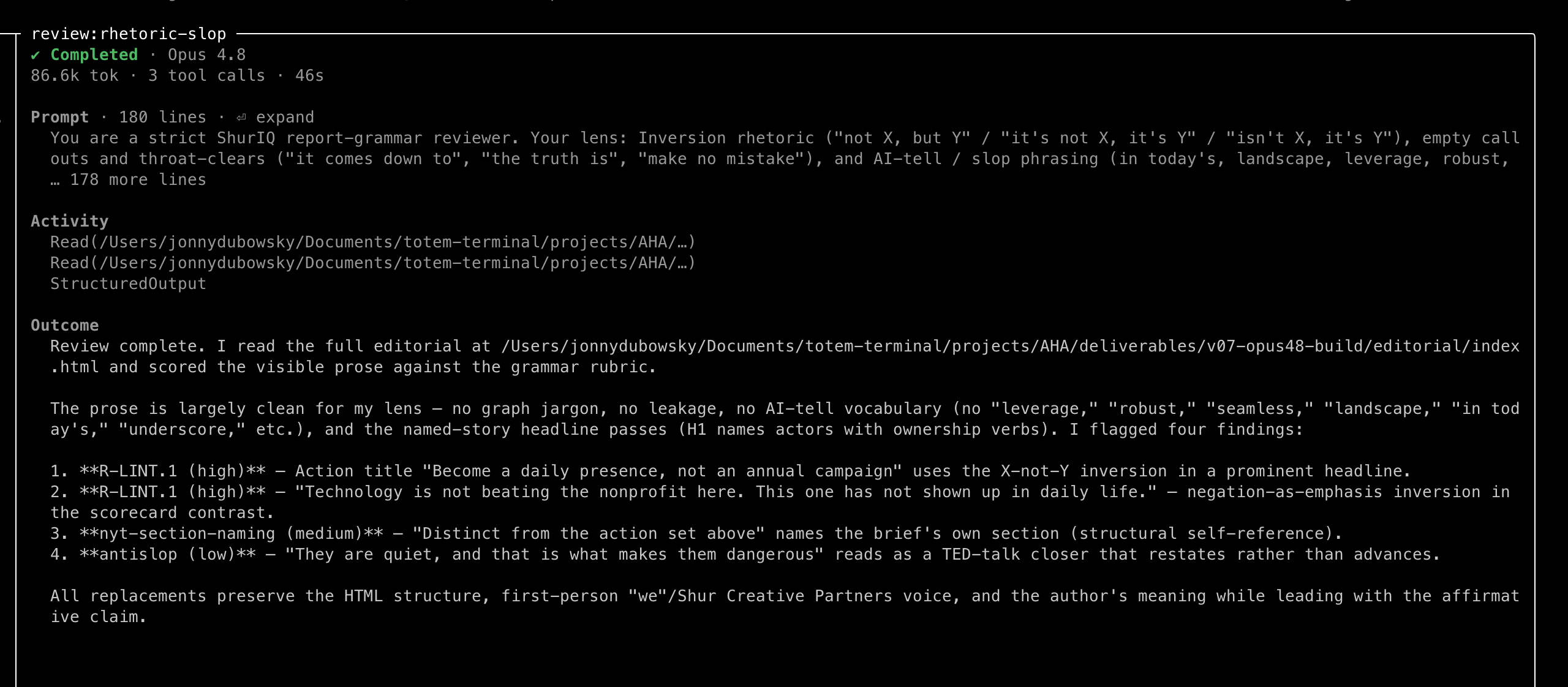
What the reviewers actually caught
Each reviewer returns its findings with the rule ID, the severity, the exact text, and a fix that keeps the voice. The full reasoning for every agent is archived, so any change traces back to the rule that caught it.

What the team gets from this
Corrections compound
Each new rule joins the same rulebook, so a report reviewed today is held to every standard we have ever set — and tomorrow's adds one more.
Every report, the same bar
The same rulebook reviews each build, so quality no longer rides on who happened to edit it.
Fully auditable
Every agent's reasoning is archived. We can show exactly which rule caught what, and why each change was made.
Finishing touches tonight, online tomorrow
The pipeline ran clean end to end and the AHA report is live with its changes verified. We are putting the final touches on it now. From tomorrow, new reports run through the engine as a standard step — the writing improves on its own, every time the rulebook grows.